🌿 How Eco-Friendly Living Boosts Your Mental Health — Naturally.
In a world where stress, anxiety, and burnout have become part of everyday life, many people are searching for holistic ways to support their mental well-being. What if the solutions we’re seeking are not just inside us — but all around us in the natural world? At EcoVande, we believe that sustainable living isn’t only good for the planet — it’s great for your mind, mood, and emotional balance too.
🌱 1. Nature Isn’t Just Beautiful — It’s Therapeutic
Moreover, spending time in nature has real, scientifically supported benefits for mental health. Research shows that regular exposure to green spaces — even small parks, gardens, or street trees — can reduce stress, lower anxiety, and improve overall well-being. People with access to natural environments tend to feel calmer, have better attention, and experience stronger emotional resilience.
You can also check the reference on Mental Health Foundation.
Even just stepping outside for 20 minutes of natural light and fresh air every day can lower stress hormones like cortisol, improve mood, and help regulate your sleep cycle.
🌼 2. Sustainable Habits Create Peace of Mind
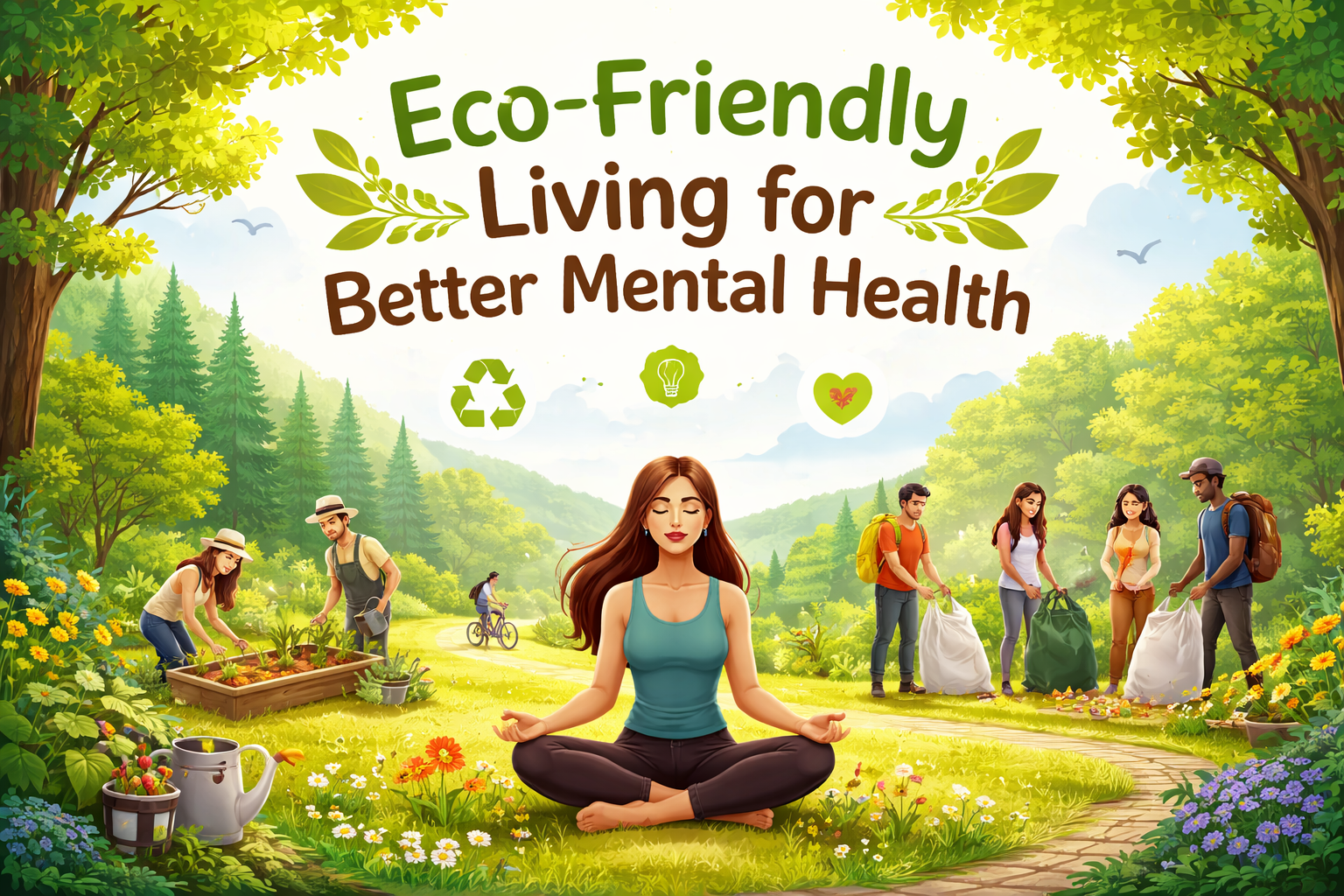
Eco-friendly practices — from recycling and mindful consumption to cycling instead of driving — help foster a sense of purpose and agency. Doing something good for the planet also makes you feel like you’re contributing to something bigger than yourself, which boosts your sense of fulfillment and emotional well-being.
Beyond purpose, sustainable habits encourage mindfulness — paying attention to your actions, choices, and their impact. This mindful awareness reduces overthinking and helps quiet mental chatter, promoting emotional balance and peace. Check reference here.
🍃 3. Being Eco-Friendly Connects You With Others
In addition, going green often brings us closer to community — whether through local clean-ups, gardening groups, or sustainability workshops. These shared activities help build meaningful social connections, which are a cornerstone of mental health. Strong social ties are linked to lower feelings of loneliness and stronger emotional support networks.
How Nature Positively Impacts Mental Well-Being
🧘♂️ 4. Eco Retreats, Digital Detox & Mindful Breaks
Eco-friendly retreats and nature-based practices like forest bathing (inspired by the Japanese shinrin-yoku) are becoming popular ways to recharge. These immersive experiences reduce stress, boost mood, and increase creativity — all without harming the environment.
For example, activities like forest bathing, mindful nature walks, or meditation outdoors encourage you to slow down, reconnect with your senses, and disconnect from constant digital noise — a healthy form of digital detox that reduces anxiety and improves clarity. VeryWell Mind explained it well.
🌍 5. Fighting Eco-Anxiety by Taking Action
Concern about climate change and environmental destruction — sometimes called eco-anxiety — is real and growing. But science suggests that engaging in pro-environmental actions (like recycling, green commuting, or gardening) can actually help reduce feelings of helplessness and improve overall well-being. Knowing that your actions matter — no matter how small — restores a sense of control and optimism.
🌿 Final Thoughts: A Healthier Planet, A Healthier Mind
Living sustainably isn’t just about reducing your carbon footprint — it’s about nurturing your mental landscape too. When you care for the environment, you’re also caring for your inner world: reducing stress, enhancing purpose, building community, and reconnecting with what truly matters.
Take a mindful step outside, plant a garden, choose a walk over a drive — your mental health will thank you, and so will the planet.
Also, check Mental Health and Sustainable Living: How Eco-Friendly Habits Improve Well-Being.