Common Greenwashing Tricks You Should Avoid
As sustainability gains importance, greenwashing tricks have become a common tactic used by brands to falsely appear eco-friendly. These misleading practices confuse consumers and undermine genuine efforts to protect the environment. In this article, we’ll explore the most common greenwashing tricks you should watch out for, helping you make smarter, more ethical choices when supporting sustainable brands.
For eco-conscious consumers and sustainable businesses alike, understanding greenwashing is essential. In this article, we’ll break down the most common greenwashing tricks, explain why they’re misleading, and show you how to spot genuinely sustainable brands.
What Is Greenwashing?
Greenwashing is the practice of creating a false or misleading impression about how environmentally friendly a product, service, or brand really is. Instead of making meaningful changes, companies use vague language, selective facts, or visual cues to appear sustainable without backing it up.
Greenwashing doesn’t just confuse consumers—it damages trust, slows real environmental progress, and hurts brands that are genuinely committed to sustainability.
Why Greenwashing Is a Serious Problem
Greenwashing affects more than just purchasing decisions:
- It misleads consumers who want to make responsible choices
- It undermines ethical brands doing real sustainability work
- It reduces accountability for companies causing environmental harm
For eco-focused businesses and digital platforms like Ecovande, avoiding greenwashing isn’t optional—it’s a responsibility.
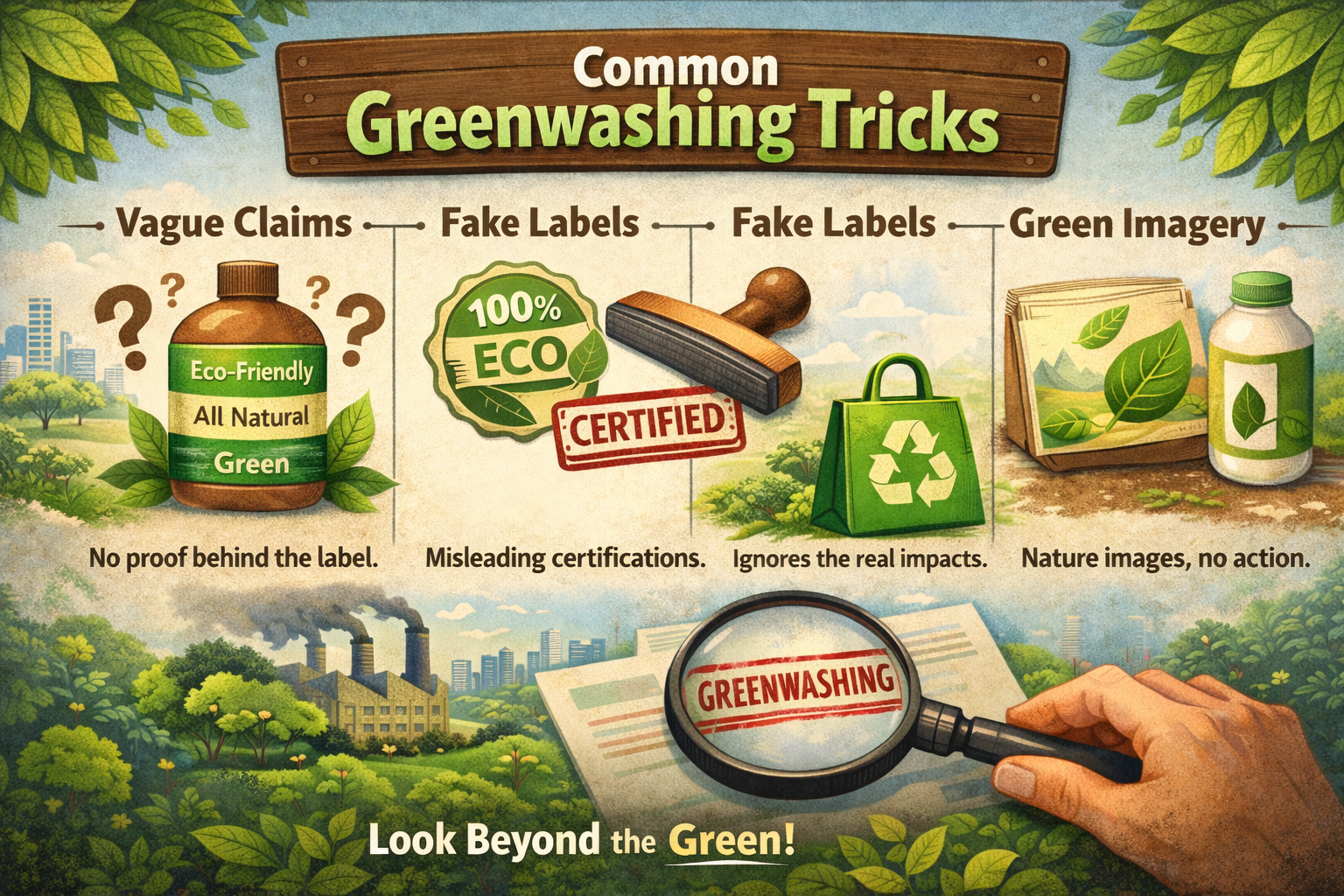
1. Using Vague or Undefined Eco Claims
One of the most common greenwashing tricks is using unclear terms such as:
- “Eco-friendly”
- “Green”
- “Natural”
- “Sustainable”
These words sound positive but often have no clear definition unless supported by evidence.
How to Spot It
If a brand doesn’t explain how or why something is sustainable—such as materials used, energy sources, or certifications—it’s likely greenwashing.
What Genuine Brands Do
Authentic eco brands provide specific details, measurable data, or third-party verification to support their claims.
2. Highlighting One Green Feature While Ignoring the Rest
Some companies promote a single eco-friendly feature to distract from larger environmental issues. For example, advertising recyclable packaging while the product itself causes significant pollution.
Why This Is Misleading
This tactic focuses attention on a small improvement while hiding the bigger environmental footprint.
What to Look For
Real sustainability looks at the entire lifecycle—from sourcing and production to usage and disposal.
3. Using Green Visuals Without Substance
Greenwashing often relies heavily on visual cues, such as:
- Green color palettes
- Leaves, trees, or earth icons
- Nature-inspired branding
While design matters, visuals alone don’t make a brand sustainable.
Tip for Consumers
Always look beyond the design. A genuinely eco-friendly brand backs its visuals with transparent actions and policies.
4. Fake or Misleading Certifications
Some brands create their own “eco labels” or display symbols that resemble legitimate certifications but have no recognized authority behind them.
How to Avoid This Trap
Check whether certifications come from trusted, independent organizations. If you can’t verify them, treat the claims with caution.
5. Irrelevant Environmental Claims
Another greenwashing trick is promoting an environmental feature that is legally required anyway or irrelevant to the product’s real impact.
For example, advertising “CFC-free” products when CFCs are already banned by law.
Why This Matters
It creates a false sense of responsibility while offering no real environmental benefit.
6. Lack of Transparency
Brands that are greenwashing often avoid sharing:
- Detailed sourcing information
- Environmental impact data
- Sustainability reports
What Ethical Brands Do Differently
Truly sustainable companies are open about both progress and limitations. Transparency builds trust—even when the brand isn’t perfect.
Greenwashing in Digital & Online Businesses
Greenwashing doesn’t only exist in physical products—it’s also common in the digital space.
Examples include:
- Claiming “green websites” without optimizing performance
- Promoting sustainability without using green hosting
- Ignoring the carbon footprint of bloated websites
Eco-friendly digital practices include:
- Lightweight, fast-loading websites
- Green or carbon-neutral web hosting
- Ethical digital marketing strategies
These are areas where sustainable brands can make real, measurable impact.
How to Avoid Greenwashing as a Business
If you run a brand or website, here’s how to stay on the right side of sustainability:
- Be honest about where you are in your journey
- Avoid exaggerated claims
- Back everything with evidence
- Focus on real impact, not buzzwords
- Make sustainability part of long-term strategy, not just marketing
Authenticity always outperforms empty promises in the long run.
Final Thoughts
Greenwashing may offer short-term attention, but it leads to long-term damage—both for the planet and for brand credibility. As consumers become more informed, transparency and ethical practices are no longer optional.
By learning to recognize greenwashing tricks and supporting genuinely sustainable brands, we can push businesses toward real environmental responsibility.
At Ecovande, sustainability isn’t a marketing label—it’s a digital mindset focused on ethical growth, transparency, and impact 🌱
Greenwashing is a tactic where companies create misleading impressions about their environmental impact. For more details on this, check out the EPA’s guide on greenwashing
Also, For more on reducing your website’s impact, check out our article on How Eco-Friendly Websites Reduce Carbon Footprint